Ten Ways NAS Is Getting Enshitified

Contents hide
1 10 WAYS that NAS is Getting Screwed
1.1 The Widespread Adoption of Soldered LPDDR RAM on x86 Hardware
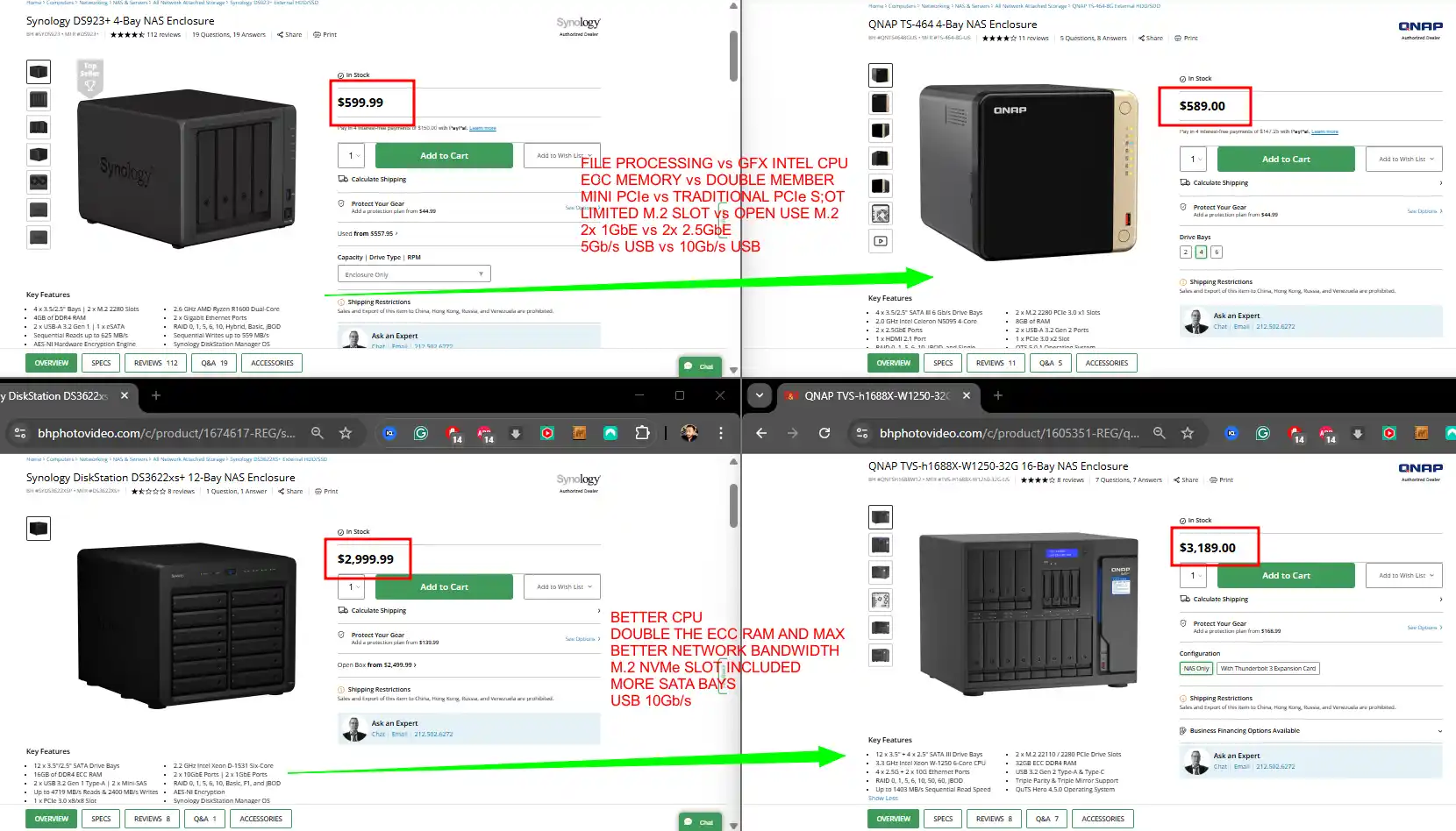
1.2 Persistent Network Stagnation and Multi-Gigabit Price Premiums
1.3 Drive Lock-In Policies and Ecosystem Validation Restrictions
1.4 Integration of Fixed Low-Capacity OS Drives
1.5 PCIe Lane Throttling and Mismatched Hardware Connectivity
1.6 Recycled Hardware Generations and Disguised Product Refreshes
1.7 Hard Drive Capacity Squeeze and Escalating Total Cost of Ownership
1.8 DRAM-Less SSD Architectures and Reduced NAND Channel Densities
1.9 Escalating Software Memory Requirements and Relabeled Modules
1.10 Software Homogenization and Interface Uniformity
1.11 Conclusion: The Shift Toward Closed Storage Appliances…
1.15 Discover more from NAS Compares
10 WAYS that NAS is Getting Screwed
Over the past 18 to 24 months, the consumer and prosumer Network Attached Storage (NAS) market has undergone a noticeable shift in design priorities, hardware architecture, and software accessibility. While broader industry pressures—ranging from component supply constraints to shifting manufacturing priorities—have introduced genuine engineering challenges, many recent market adjustments reflect cost-cutting measures and ecosystem lock-in at the expense of end-user control. What was long considered an industry defined by modularity, local ownership, and hardware longevity is increasingly adopting the restrictive design patterns common in mobile and walled-garden tech ecosystems. The following evaluation details the primary structural shifts and hardware trade-offs currently impacting local storage hardware.

The Widespread Adoption of Soldered LPDDR RAM on x86 Hardware
Historically, soldered LPDDR memory was primarily restricted to low-power ARM-based NAS units. Over the past 18 months, however, x86-based platforms utilizing modern Intel and AMD processors—particularly entry-to-midrange systems powered by Intel N100 and N150 chips—have increasingly transitioned to non-upgradable, surface-mounted RAM. This architectural shift eliminates the user’s ability to expand memory capacity as self-hosting demands grow, effectively putting a permanent ceiling on running memory-heavy Docker containers, ZFS pools, or virtual machines. Beyond limiting post-purchase scalability, fixing LPDDR4X or LPDDR5 modules directly to the PCB introduces a single point of failure; if an individual memory chip fails out of warranty, the entire mainboard requires replacement rather than a simple $30 SODIMM swap.
Persistent Network Stagnation and Multi-Gigabit Price Premiums
Despite 2.5GbE becoming standard across mainstream consumer motherboards and home networking hardware, many primary NAS manufacturers continue to ship mid-range enclosures equipped with 1GbE ports. Upgrading to 10GbE connectivity—or intermediate speeds like 5GbE—remains locked behind significant hardware price premiums, despite the widespread availability of low-cost, power-efficient PHY controllers from vendors like Realtek and Aquantia. Rather than integrating multi-gigabit networking natively into base platforms as standard hardware, manufacturers frequently leverage 10GbE as an artificial segmentation tool. This forces users to purchase expensive proprietary expansion cards or jump into top-tier product lines simply to achieve local transfer speeds that keep pace with modern storage media.

Drive Lock-In Policies and Ecosystem Validation Restrictions
In an effort t
[文章截断]