作者:NJ Convery
四个世代以来,Neil Heseltine 的家族一直在 Hill Top Farm 务农,这座农场坐落于约克郡谷地(Yorkshire Dales)壮丽景观中的 Malhamdale 山坡上。在其中的大部分时间里,绵羊都是农场生意的支柱。
但 Neil 表示,过去20年里发生了"彻底的转变",为了维持生计,他已逐渐放弃养羊。在此期间,这座1500英亩的农场从巅峰期的800多只产羔母羊,缩减至今年春天的仅45只。
“如果当初没有开始做出这些改变,我真不敢想象农场的财务状况会是什么样子,“他告诉我,“我要么出于情怀继续走养羊这条路,要么做出大胆的决定。”
尽管大多数高地农民仍在土地上养羊,但这里发生的变化,不仅映照了整个约克郡谷地,也反映了整个英国农业产业的境况。牧羊人的生活从来都不轻松,而对许多人来说,如今要盈利比以往任何时候都更加艰难。
(图片说明:Neil Heseltine 的家族已在 Hill Top Farm 务农四个世代)
据全国农民联盟(NFU)称,英国农民的平均年龄为60岁,近年来从燃料到饲料的各种成本都大幅上涨。与此同时,许多农民的补贴收入大幅减少,还有人担心近期的贸易协定将带来更激烈的海外竞争。
英国脱欧后与新西兰和澳大利亚达成的最新贸易协定取消了关税,并给予两国生产商大量向英国出口羊肉的配额。
英国全国羊业协会(National Sheep Association)首席执行官 Phil Stocker 表示,英国目前的繁殖母羊数量为1470万只——这是人们记忆中的最低数字。
总体而言,全国羊群数量也在下降,2025年降至3040万只——上一次出现这一数字还是在20世纪中期,当时英国人口更少,因此本土饲养羊肉的潜在市场也小得多。
据代表农民利益的农业与园艺发展局(AHDB)高级分析师 Becky Smith 称,过去50年里,羔羊肉和成年羊肉的消费量显著下降。
1980年,英国普通家庭人均每周购买128克羊肉(羔羊肉和成年羊肉)。到2024年,这一数字降至人均每周仅23克。
养羊业塑造了许多人心中对约克郡谷地这类地方的印象:干石墙将牲畜圈养其中,起伏的绿色山丘因季节性放牧而保持低矮。
但保护这一英国最古老农业产业之一的历史传承的愿望,不仅与人们日渐减退的羊肉胃口相冲突,也与另一个疑问相冲突:我们的一些高地是否更适合用于促进自然恢复和生物多样性?
所有这些都引出了一个问题:英国是否已经越过"绵羊峰值”(peak sheep)?进而,这对消费者意味着什么?25年后,我的孩子们还能在周日烤肉、咖喱菜 balti 和 bhuna 中吃到我们的羊肉吗?
还有,我们一些最受尊崇和深受喜爱的景观——如湖区(Lake District)、约克郡谷地、苏格兰高地和威尔士山脉——以及在那里生活和工作的人们,将会面临怎样的命运?
为什么养羊业变得如此艰难
在北约克郡 Skipton 郊外的 Craven Cattle Mart,来自约克郡谷地和奔宁沼泽(Pennine Moors)各地的农民正在买卖牲畜,拍卖场内热闹非凡。
在外人看来,生意似乎颇为红火——但总经理 Jeremy Eaton 表示,这与47年前他刚入行时相比已相差甚远。
“我们这里曾有一些拍卖会,经常能卖出19000只待育肥羔羊,“他说,“现在如果能达到8000到9000只就算幸运了。”
(图片说明:在 Craven Cattle Mart,来自约克郡谷地和奔宁沼泽各地的农民前来买卖牲畜)
与羊打交道的人都知道,这是最艰苦的农活之一。一位曾经的牧羊人曾告诉我,羊只会做三件事中的一件:“逃跑,或者死去,或者逃跑然后立刻死去。”
根据经济合作与发展组织(OECD)和联合国粮农组织(FAO)的一份报告,预计从现在到2032年,全球羔羊肉消费量将增长15%。
但英国口味的变化意味着,由成年羊制成的 mutton 已不再像前几代人那样被大量食用,而 lamb 似乎已从每周的主食变成更多在特殊场合才享用的肉类,鸡肉等"白肉"越来越多地取代了羔羊肉和牛肉。
据 AHDB 的 Becky Smith 称,全国羊群数量的下降实际上推动了羊肉价格的强劲上涨,2024年羊肉价格创下历史新高。
但尽管羊价上涨,利润微薄的高地农民在柴油和燃油成本上涨时却比许多人感受更深。此外,喂羊的成本也大幅飙升——今年春天每吨干草的平均价格为155英镑,而去年同期仅为75英镑。
(图片说明:据英国全国羊业协会称,英国目前有1470万只繁殖母羊)
农民以及世界农场动物福利协会(Compassion in World Farming)等团体也对新贸易协定可能损害英国农业表示担忧,因为英国农场必须满足高福利标准,而多个伙伴国可能并无此类要求。
极其微薄的利润空间意味着越来越多的年轻人看不到农业的未来。
漫步在 Craven Cattle Mart,这一点显而易见。“你今天在这里可以看到,这一代农民大多已超过60岁,“来自里布尔河谷(Ribble Valley)Gisburn 的39岁养羊农民 Hayley Baines 说,“年轻人不多,因为有更好的选择。”
也有人对养羊业的衰落表示欢迎。
“羊越少,苦难就越少……羊毛和羊肉产业中羊的一生,与我们作为’动物爱好者国度’的名声并不相符,“英国善待动物组织(Peta)高级副总裁 Mimi Bekhechi 说。
英国气候变化委员会此前也曾建议政府鼓励人们减少肉类和乳制品的消费,以应对气候变化。
补贴政策的变化带来了怎样的影响
NFU 的 Matthew Cole 表示,另一个问题在于——尤其是在脱欧后——补贴方式的转变:欧盟过去会根据农民饲养的牲畜数量或耕种的土地面积发放补贴,如今这一机制已被取消。
取而代之的是,历届英国政府推出了更注重"为自然而耕作"的新计划,这意味着许多农民的补贴收入大幅减少。
例如威斯敏斯特政府的"可持续农业激励”(Sustainable Farming Incentive)计划,该计划……
(图片说明:英国政府推出了更注重"为自然而耕作"的新计划)
Hill Top Farm 的 Neil Heseltine 现在养有300头牛,全年放养在户外。他说,这一转变使农场的利润更高,他的工作时间也大幅减少。
尽管许多农民原则上欢迎这些新的补贴计划,但一些人发现可用资金远低于以往支持体系的水平。
“往后看,我看得到未来吗?我不确定我们会走向何方,“在 Bolton Abbey 庄园耕作了30年的牛羊养殖户 James Foster 说,“我确实认为政府不想要我们,但人们总要吃饭,我们只能随之适应。”
Defra(环境、食品和农村事务部)表示,其英格兰农业计划每年平均投入23亿英镑,并坚称政府在贸易协定中保护农民利益,同时让供应链更加公平。
如今,苏格兰的养羊农民和高地农民面临着许多同样的挑战:利润更薄、成本上升、羔羊肉和成年羊肉需求下降。苏格兰政府同样尝试转向更重视农民所提供环境效益的补贴制度,其中一个例子是"绵羊与树木”(Sheep and Trees)计划,旨在帮助农民和土地管理者种植更多林地,同时不缩减羊群规模。
有农民抱怨苏格兰推出的一些计划不够容易申请,促使农业部长 Jim Farlie 承诺对部分项目进行审查。今年年初,NFU Scotland 和其他农业组织也表达了担忧,认为政府预算中用于支持农业的资金,既不足以支持农民有利可图地生产粮食,也不足以帮助他们实现气候和自然目标。
在北爱尔兰,绵羊数量已连续数年下降,2024年的最新统计显示该地区共有190万只羊。阿尔斯特农民联盟(Ulster Farmers Union)批评未来农业政策将养羊农民排除在外,并呼吁北爱尔兰农业、环境与农村事务部与该行业展开对话……
ndustry.
Compromise and respect?
Sheep were first domesticated approximately 10,500 years ago in the Middle East, and were eventually brought to British shores by Neolithic farmers some time around 4000BC. Sheep became such an important part of the landscape that by medieval times the phrase, “half the wealth of England rides on the back of the sheep” became familiar.
In Scotland, sheep have also played a pivotal role in the rural economy for generations and Scotland’s sheep population there has been more stable in recent years at around 6.5 million.
The history of Scottish sheep farming is also indelibly tied up with the controversial Highland Clearances when, in the late-18th and 19th century, traditional crofting families, were moved off the land when landowners realised they could make more money from farming sheep than leasing their land.
In 2004, sheep were removed from the limestone landscapes of Ingleborough, the second-highest mountain in the Yorkshire Dales and replaced with roaming native cattle breeds, who are less intensive grazers as part of the Wild Ingleborough project.

“Going forward, do I see a future? I’m not sure where we’re going with it,” says James Foster (right)
Two new scientific studies Robyn Wrigley, from the University of Leeds School of Earth and Environment, co-authored both studies and says the research provides long-term evidence of how different grazing impacts biodiversity and can help inform discussions about restoration.
 Neil Heseltine of Hill Top Farm now has 300 cattle who graze outside all year round
These changes, however, are not ones that all farmers welcome. Some I spoke to look at the landscape and see only lost livestock pasture and question how their way of life and livelihoods fit into such a future.
But David Stanners, Uplands North Group Chair at the NFU, says it’s possible for the rewilding lobby and the farmers to find common ground.
“To understand better what Natural England wants from the uplands, what wildlife trusts want, they need to understand what we (the farmers) want,” he says. “There needs to be compromise and respect on all sides.”
How Muslim communities could make a difference
But there is a ray of sunshine for the industry, according to Phil Stocker from the National Sheep Association. He believes the domestic market for sheep meat is going to keep driving forward, in large part thanks to demand from the increasing number of Muslim people in the UK.
AHDB statistics suggest that 80% of halal consumers eat lamb on a weekly basis and 64% eat mutton weekly. By contrast, only 6% of the general UK population eats lamb each week.
According to the AHDB, while Muslims make up around 6.5% of the UK population they account for 30% of lamb sales annually. Lamb is often Muslim consumers’ meat of choice for family occasions and festivals like Ramadan and Eid, while mutton is a popular ingredient in curries and stews.
Because of this, Stocker says he doesn’t envisage the total demise of the industry. But right now, he adds, “we’re surviving by people’s interest and by market demand almost in spite of the work that the policy makers and others are doing on agricultural and land management policy”.
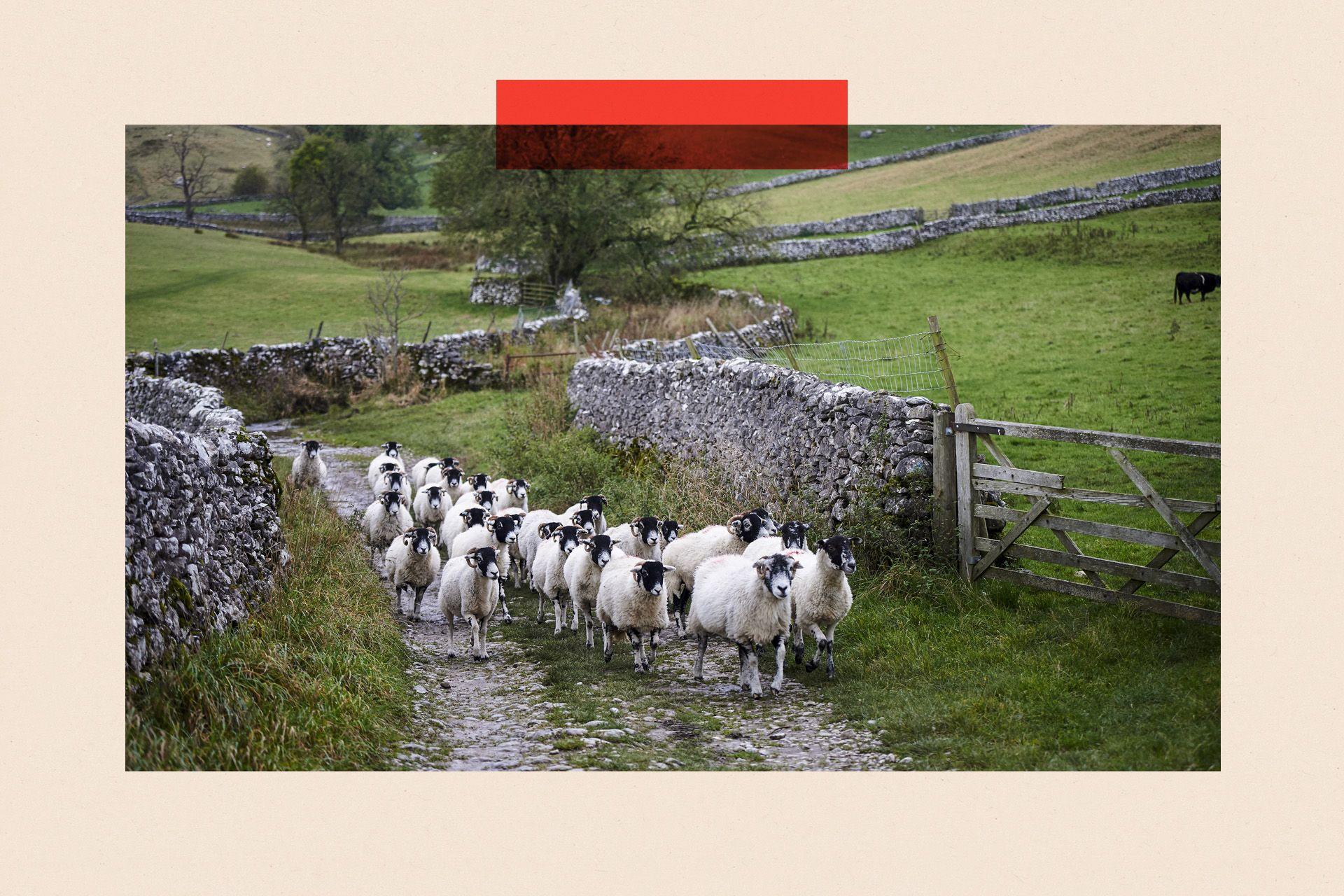 Most upland farmers still keep sheep on their land
A worst-case scenario for farmers and consumers would see UK lamb become even more expensive and less common on our shelves in favour of ever more sheep meat imported from major suppliers like New Zealand and Australia.
The AHDB project sheep are likely to decrease in number across many farms but take a walk in the Lake District or Welsh mountains in another 25 years and you will likely still see sheep dotting the hillsides.
Farmers and conservationists alike told me they need to see clear plans for what policymakers want from the uplands for the next generation. Their hope is that, as we move into the second quarter of the 21st Century, traditional sheep farmers and rewilders alike find their place in the nation’s cherished uplands.
Top picture credit: Universal Images Group via Getty Images
*Correction 15 October: This article was amended to make clear that the Sustainable Farming Incentive and the £2.3bn a year Defra investment apply only to England, not England and Wales as we reported. When it was first
More from InDepth
- Why Britain has a deer problem - leaving damage that costs millions
- Martha Kearney: I’m worried about Britain’s wildflowers - so I planted a meadow

*BBC InDepth *is the home on the website and app for the best analysis, with fresh perspectives that challenge assumptions and deep reporting on the biggest issues of the day. Emma Barnett and John Simpson bring their pick of the most thought-provoking deep reads and analysis, every Saturday. Sign up for the newsletter here
Get in touch
Are you personally affected by the issues raised in this story?