Figure caption,
UK’s rarest bird of prey successfully breeds in secret location
ByJustin Rowlatt, Climate Editor and Tabby Wilson
The UK’s rarest bird of prey has successfully nested for the second year running in the same secret location, the Royal Society for the Protection of Birds (RSPB) has reported.
A male Montagu’s harrier, known as “AU” by conservationists, bred with two different females, rearing six chicks across two nests on English farmland.
Montagu’s harriers were put on a “red list” of birds most at risk in the UK in 2021. Numbers have declined from a high of nine successful nests in 2011, to no evidence of successful breeding between 2020 and 2024.
An RSPB spokesperson said: “We are doing our absolute utmost to save this iconic species in the UK and are delighted with six flying juveniles this year.”
Four chicks hatched in the same secret location last year.
The charity said careful monitoring, in partnership with the farmers on whose land the birds nested, meant the nests were protected by fences to exclude ground predators such as foxes.
The single male Montagu’s harrier has also been working very hard to keep his two nests of hungry chicks fed.
The BBC was given exclusive access to the nest and was able to witness some of the spectacular feeding behaviour of the raptors: the male drops prey in mid-air and the female rolls upside down to catch it in her talons.
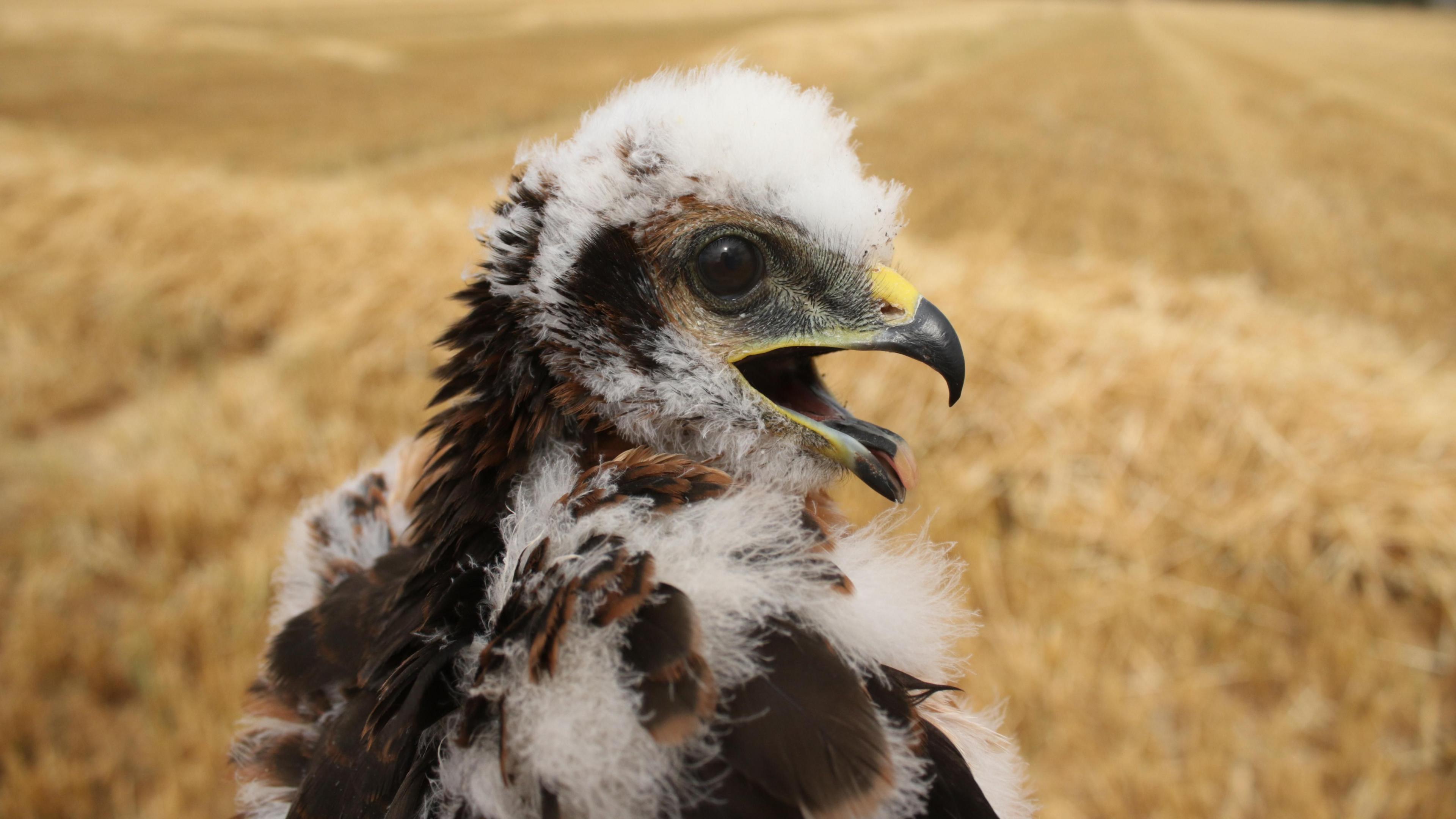 These slender, long-winged raptors make an epic annual migration to Africa in winter and return to Europe to nest over summer, often setting up home in agricultural fields.
But little is known about the behaviour of juvenile harriers once they leave the nest. This year, for the first time, the RSPB has fitted two of the chicks with satellite tags in the hope of providing the birds with better protection.
“It will allow us for the first time ever to work out where they’re going, what migration route, how long they’ll spend there, and will they come back to the UK in the first year or the second year,” said Mark Thomas, head of investigations at the RSPB.
“All of that information is the bit that’s missing from the jigsaw.”
It is also hoped the tagging can better protect the rare birds from having their nests, on the ground, hidden among crops, inadvertently destroyed.
“This is a species right on the brink, and climate change is not helping that. The harvest here, for example, this year, was like a month earlier than in previous years. So it almost puts any Montagu’s harrier nest at the peril of inadvertently being destroyed by farm machinery,” said Thomas.
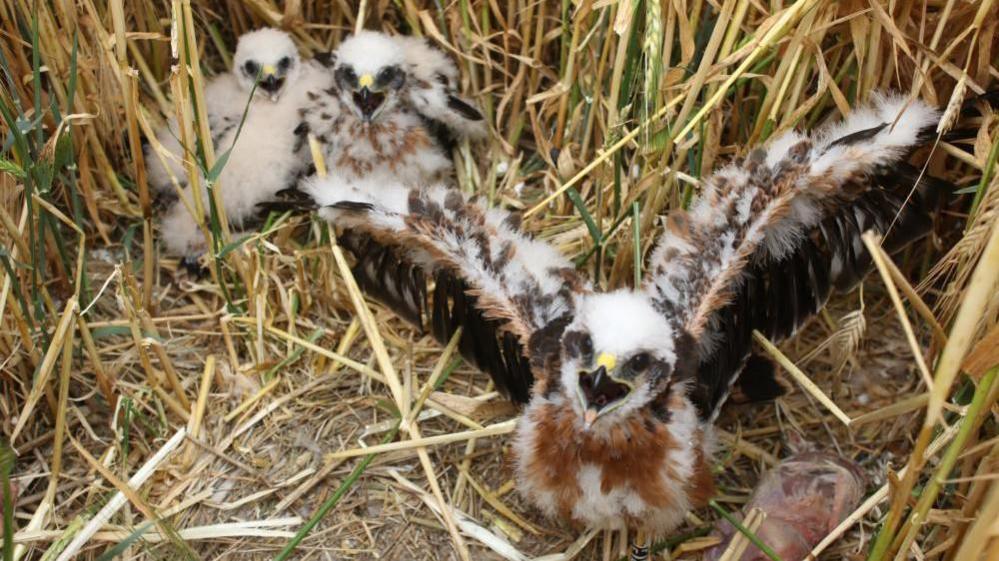 Conservationists have urged birders to look out for the youngsters, and report any sightings by emailing the RSPB’s Montagu’s hotline at montys@rspb.org.uk.